9 Best Mulch Types for Durable Landscaping Paths
Walking barefoot on a garden path transforms the ordinary into the intimate. The surface beneath determines whether your journey feels welcoming or uncomfortable, whether weeds invade each month or stay dormant for seasons. Selecting the best mulch for landscaping paths requires balancing drainage, compaction resistance, and decomposition rates against foot traffic patterns and regional climate. The right material anchors your design while suppressing unwanted vegetation through a combination of physical barriers and allelopathic compounds.
Materials
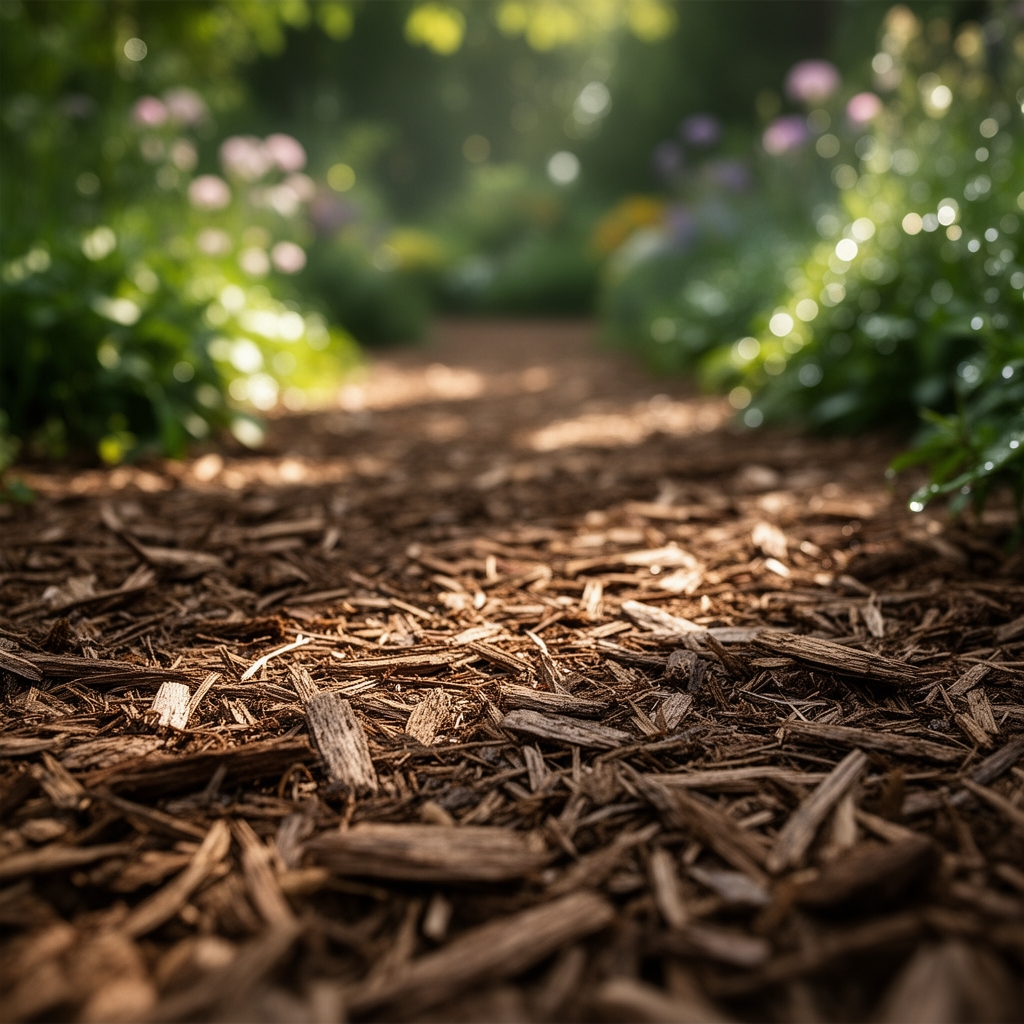
Shredded Hardwood Bark (pH 5.5-6.2, trace NPK 0.5-0.3-0.2) decomposes slowly over 24-36 months. Its interlocking texture resists displacement better than chips. Oak and hickory varieties contain higher tannin concentrations that inhibit weed germination through temporary soil acidification.
Pine Bark Nuggets (pH 4.0-5.0, NPK negligible) offer the longest lifespan at 3-4 years in Zones 6-9. The resinous compounds deter fungal colonization while maintaining porosity. Choose medium-grade nuggets measuring 1.5-2.5 inches for paths experiencing moderate foot traffic.
Cocoa Hull Mulch (pH 5.8-6.0, NPK 2.5-1.0-3.0) releases nitrogen slowly as it breaks down over 18 months. The theobromine content creates a chocolate aroma while deterring most mammals. This material mats together after rain, forming a semi-permeable crust that stabilizes path edges.
Cypress Heartwood (pH 6.0-6.5, trace minerals only) contains cypressene oils that naturally resist both decay and insect activity. Harvest concerns make reclaimed or certified sources preferable. Expect 4-5 year durability in humid climates where other mulches fail within 18 months.
Hemlock Bark (pH 5.0-5.8, NPK 0.3-0.2-0.1) provides intermediate durability at 2-3 years. Its flaky texture creates natural interstices that promote drainage while the tannin profile suppresses broadleaf weed seeds more effectively than grass seeds.
Cedar Chips (pH 6.5-7.0, minimal nutrients) release thujone compounds that inhibit root development in both weeds and desirable plants. Apply only on paths bordered by stone or metal edging. Decomposition slows to 3-4 years in arid western zones.
Straw Mulch (pH 7.0-7.5, NPK 0.7-0.2-1.2) suits temporary paths in vegetable gardens where annual tillage occurs. Wheat straw carries fewer viable seeds than oat or barley alternatives. Replace every 6-8 months as microbial activity accelerates breakdown.
Gravel-Mulch Hybrid combines 2 inches of pea gravel (6-8mm diameter) as a base layer with 1.5 inches of shredded bark on top. The gravel ensures drainage with a percolation rate exceeding 4 inches per hour while the organic layer moderates surface temperature and improves aesthetics.
Rubber Mulch (pH neutral, no nutrient value) manufactured from recycled tires maintains consistent depth for 10+ years. The material prevents compaction and remains permeable but may leach zinc at concentrations of 2-8 ppm in acidic conditions. Use only where edible plantings sit more than 24 inches away.
Timing
Install path mulch in early spring across Zones 3-7, targeting the window between final frost and active weed germination. Soil temperatures of 50-55°F trigger the first flush of annual weed seeds. Applying mulch before this threshold suppresses up to 85% of light-dependent germinators.
In Zones 8-10, late fall installation proves superior. November through January temperatures allow mulch to settle and begin forming beneficial fungal networks before spring growth surges. The winter rainy season integrates the bottom layer with soil surface, improving water infiltration rates by 30-40%.
Delay application if installing over freshly disturbed ground. Allow 3-4 weeks for initial soil settlement to prevent uneven subsidence that creates trip hazards and drainage channels.
Phases

Preparation Phase: Excavate path area to 4-5 inches depth using a flat spade to create uniform grade. Remove roots exceeding 0.25 inches diameter. Install landscape fabric rated at 3.0-ounce weight minimum for commercial-grade weed suppression. Overlap seams by 6 inches and secure every 18 inches with 6-inch staples.
Pro-Tip: Spray fabric surface with mycorrhizal inoculant suspension (100 spores per milliliter) before mulch application. This establishes fungal networks that colonize mulch particles and accelerate lignin breakdown while competing with pathogenic species.
Laying Phase: Distribute mulch to uniform 3-inch depth using a leveling rake. Compact lightly with a hand tamper to 2.5-inch final thickness. This density provides adequate light blockage (reducing photosynthetically active radiation by 95%) while maintaining air exchange necessary for aerobic decomposition.
Pro-Tip: Grade path surface to 2% cross-slope (0.25 inches per foot of width) to shed water toward planting beds. This prevents standing water that accelerates anaerobic decay and mosquito breeding.
Establishment Phase: Monitor weekly for first 6 weeks. Add supplemental mulch to areas showing compression below 2 inches or where fabric becomes visible. Edge borders should stand 0.5 inches above surrounding grade to contain material during heavy rain.
Pro-Tip: Apply pre-emergent herbicide containing prodiamine at 0.83 pounds active ingredient per acre along path margins only. This creates a chemical barrier preventing rhizomatous grass encroachment without affecting established woody ornamentals.
Troubleshooting
Symptom: White fungal mycelium visible on mulch surface, appearing as cobweb-like mats.
Solution: This saprophytic growth (often Physarum species) indicates healthy decomposition. Disturb with a rake to increase oxygen penetration. Fungal activity actually improves long-term soil structure through glomalin production.
Symptom: Mulch developing gray, dusty appearance with fine powder when disturbed.
Solution: Artillery fungus (Sphaerobolus stellatus) colonization. Remove affected material within 10-foot radius. Switch to pine bark with pH below 5.0, which inhibits spore germination. Clean nearby surfaces with oxygen bleach solution (1:4 ratio with water).
Symptom: Path surface compacting to less than 1 inch depth within 6 months.
Solution: Decomposition exceeding replacement rate. Increase refresh frequency to every 8 months, or transition to larger nugget sizes (2-3 inches) that resist microbial breakdown. Test cation exchange capacity to verify adequate nutrient retention.
Symptom: Green algae film forming in shaded path sections.
Solution: Excess moisture retention combined with reduced air circulation. Prune overhanging canopy to increase direct sun exposure to minimum 3 hours daily. Incorporate 20% fine gravel into top inch to improve surface drying.
Symptom: Perennial weeds (dock, dandelion, thistle) penetrating mulch layer.
Solution: These tap-rooted species store sufficient energy reserves to penetrate 4-inch barriers. Hand-pull immediately, removing entire root structure to 6 inches minimum. Spot-treat persistent colonies with glyphosate at 2% solution, applied to leaves only during active growth.
Maintenance
Refresh organic mulch annually at 1-inch depth to maintain 2.5-inch minimum thickness. Schedule for early spring in northern zones, late fall in southern regions to match natural leaf litter cycles.
Rake path surface every 6 weeks to redistribute material and break surface crusting. This maintains infiltration rates above 2 inches per hour and prevents channelization during storm events.
Apply 0.5 inches of compost topdressing every 24 months beneath mulch layer. This replenishes soil organic matter depleted through microbial respiration while buffering pH shifts from acidic mulch decomposition.
Edge path borders twice annually using a half-moon edger or power trimmer. Maintain crisp 90-degree angles between path surface and adjacent planting beds to prevent lateral mulch migration.
Monitor moisture levels 3 inches below surface using a basic soil probe. Mulched paths should remain at 40-60% field capacity. Irrigation proves rarely necessary except during drought periods exceeding 3 weeks without measurable precipitation.
Remove fallen leaves weekly during autumn to prevent matting that creates anaerobic pockets. Deciduous debris decomposes 3-4 times faster than path mulch, altering surface chemistry and encouraging fungal pathogens.
FAQ
How deep should path mulch be applied initially?
Install at 3-inch depth, which compresses to 2.5 inches after settling. This thickness blocks 95% of light required for weed seed germination while allowing adequate gas exchange for beneficial soil organisms.
Can I mix different mulch types on the same path?
Combine materials with similar decomposition rates only. Pairing fast-decaying straw (6-month lifespan) with durable pine nuggets (4-year lifespan) creates uneven surfaces requiring constant releveling.
What prevents mulch from washing away on sloped paths?
Install 4-inch pressure-treated timber or steel edging sunk to half-depth. On grades exceeding 8%, create terraced sections every 15 feet using cross-path barriers that slow water velocity below erosive threshold.
How often does path mulch need complete replacement?
Full removal proves unnecessary. Add 1-inch layers annually. After 5-7 years, the decomposed base layer integrates with topsoil, improving texture and cation exchange capacity naturally.
Does mulch attract termites to nearby structures?
Subterranean termites inhabit soil regardless of surface mulch. Maintain 18-inch mulch-free zone against building foundations. Cypress and cedar varieties offer no special termite resistance despite marketing claims.