5 Secret Ways How to Grow Strawberry Patches
The smell of damp, acidic earth signifies a healthy rhizosphere where Fragaria x ananassa thrives. When you press a finger into the soil, it should yield with the consistency of shredded peat and coarse sand. Success depends on the turgor pressure within the plant cells; a firm, turgid leaf indicates a robust vascular system capable of transporting sugars to developing fruit. Learning how to grow strawberry patches requires more than surface-level care. It demands an understanding of soil chemistry and plant physiology to ensure the crowns remain elevated above the soil line while the roots penetrate deep into the substrate. Precision in nitrogen application and moisture management prevents the cellular collapse often seen in poorly managed plots.
Materials:

The foundation of a high-yielding patch is a **friable loam** with a high **Cation Exchange Capacity (CEC)**. This allows the soil to hold onto essential nutrients like potassium and magnesium without leaching during heavy irrigation.
- Soil pH: Maintain a range between 5.5 and 6.2. Use elemental sulfur to lower pH or calcitic lime to raise it.
- Pre-Planting NPK: Incorporate a balanced 10-10-10 fertilizer at a rate of 2 pounds per 100 square feet.
- Established Patch NPK: Shift to a 5-10-15 ratio once fruiting begins to prioritize potassium for fruit density and sugar accumulation.
- Substrate Texture: The soil must be gritty. Aim for a mix of 60% sandy loam, 20% composted organic matter, and 20% perlite to ensure oxygen reaches the root zone.
Timing:
Strawberries are sensitive to the photoperiod, or the length of daylight, which triggers the transition from vegetative growth to reproductive flowering. In Hardiness Zones 3 through 10, timing is dictated by the last spring frost. For June-bearing varieties, planting must occur as soon as the soil reaches 45 degrees Fahrenheit.
The "Biological Clock" of the strawberry plant is governed by chilling hours. Most varieties require between 200 and 700 hours of temperatures between 32 and 45 degrees Fahrenheit to break dormancy effectively. If you miss this window, the plant will prioritize runner production over fruit development, leading to a lush but unproductive patch.
Phases:

Sowing and Seed Stratification
Starting from seed requires a cold stratification period of 4 weeks in a refrigerator to mimic winter. Sow seeds on the surface of a sterile starting mix; they require light for germination. Maintain a constant temperature of 65 to 75 degrees Fahrenheit.
Pro-Tip: Use a heat mat to maintain soil temperature. Biological Why: Consistent bottom heat increases the metabolic rate of the embryo, accelerating the enzymatic breakdown of the seed coat.
Transplanting
When moving runners or nursery starts, the crown must sit exactly at the soil surface. Planting too deep causes crown rot; planting too shallow leads to desiccation. Space plants 18 to 24 inches apart in rows spaced 3 feet apart.
Pro-Tip: Dip roots in a mycorrhizal fungal inoculant before burial. Biological Why: Mycorrhizal symbiosis expands the surface area of the root system, allowing for enhanced phosphorus uptake and drought resistance.
Establishing the Patch
During the first growing season, remove all flower blossoms. This forces the plant to redirect its energy from reproduction to vegetative structural integrity.
Pro-Tip: Use a sharp hori-hori knife to prune the first set of runners. Biological Why: This suppresses auxin flow to the stolons, concentrating growth hormones in the primary crown to build a massive root base for the following year.
The Clinic:
Physiological disorders often mimic disease but result from environmental stress or nutrient imbalances.
- Symptom: Tip Burn on New Leaves.
- Cause: Calcium deficiency or low humidity.
- Solution: Apply a foliar spray of calcium nitrate and ensure consistent soil moisture.
- Symptom: Small, Misshapen Fruit.
- Cause: Poor pollination or boron deficiency.
- Solution: Increase pollinator habitat and apply 0.1 pounds of boron per acre if soil tests confirm a deficit.
- Symptom: Yellowing between leaf veins (Interveinal Chlorosis).
- Cause: Iron or magnesium deficiency, often due to high pH.
- Solution: Lower soil pH to 6.0 and apply chelated iron.
Fix-It for Nitrogen Chlorosis: If older leaves turn a uniform pale yellow, the plant is scavenging nitrogen for new growth. Apply a quick-release ammonium nitrate fertilizer at a rate of 1 pound per 100 feet of row.
Maintenance:
Precision is the difference between a mediocre harvest and a professional yield. Use a soil moisture meter daily. Strawberries require exactly 1.5 inches of water per week delivered at the drip line. Overhead watering is prohibited as it encourages fungal pathogens on the foliage.
Use bypass pruners to remove senescing leaves that have turned red or brown. This improves airflow through the canopy. Apply a 3-inch layer of clean wheat straw around the base of the plants. This mulch regulates soil temperature, suppresses weed competition, and keeps the fruit from touching the soil, which prevents rot.
The Yield:
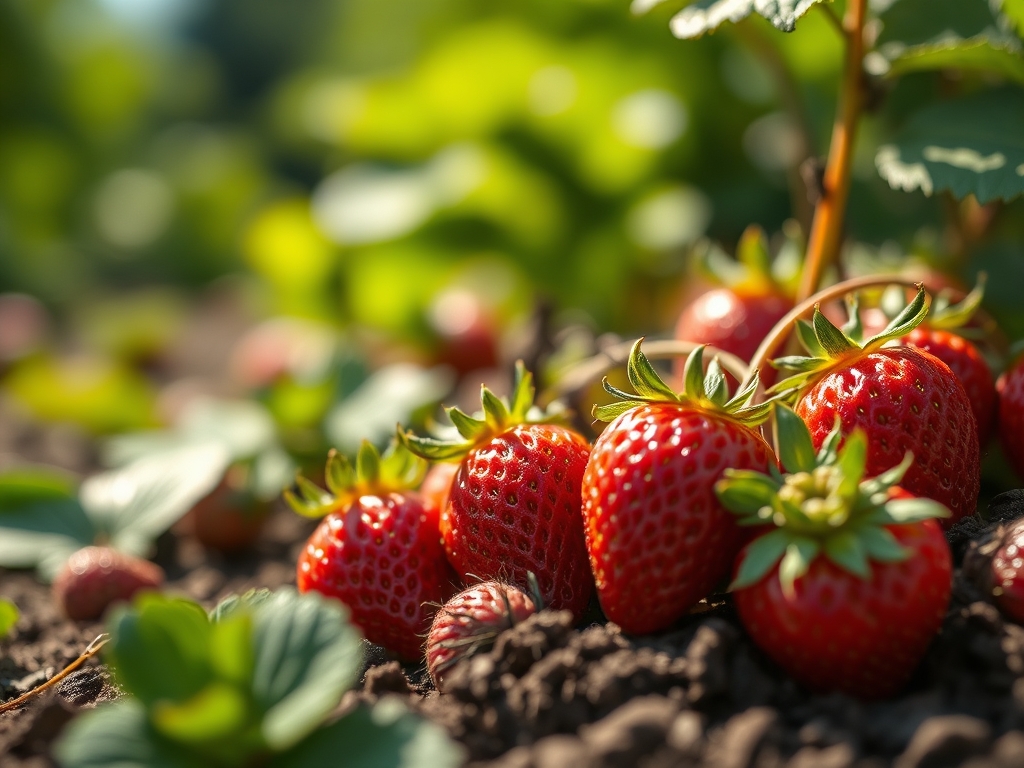
Harvesting occurs when the fruit is 100% red with no white or green at the tip. Strawberries do not ripen further once removed from the vine. Use your thumb and forefinger to snap the stem one-half inch above the fruit to avoid bruising the delicate flesh.
Harvest during the coolest part of the day, typically between 6:00 AM and 9:00 AM. This ensures the fruit has maximum field heat removal. Place the berries in a shallow container to prevent crushing. For "day-one" freshness, do not wash the berries until immediately before consumption; moisture on the skin triggers rapid cellular breakdown and mold growth.
FAQ:
How often should I water my strawberry patch?
Provide 1.5 inches of water weekly. Use a soil moisture meter to ensure the top 6 inches of soil remain damp but not saturated. Avoid overhead irrigation to prevent leaf spot and fruit rot.
What is the best fertilizer for strawberries?
Use a 10-10-10 NPK blend during the initial planting phase. Switch to a high-potassium 5-10-15 formula once the plants begin to flower to support fruit development and increase sugar brix levels.
Why are my strawberry leaves turning yellow?
This is typically nitrogen chlorosis or an iron deficiency caused by high soil pH. Test your soil; if the pH is above 7.0, apply elemental sulfur to return it to the ideal 5.5 to 6.2 range.
When is the best time to plant strawberries?
Plant in early spring as soon as the soil reaches 45 degrees Fahrenheit. This allows the root system to establish before the heat of summer triggers the plant's reproductive cycle and moisture stress.
How do I stop my strawberries from rotting on the vine?
Apply a 3-inch layer of straw mulch to keep fruit off the soil. Ensure plants are spaced 18 inches apart to promote airflow, which reduces the humidity levels that allow fungal pathogens to thrive.