7 Best Ergonomic Vegetable Garden Tool Handles
The ache starts in the palm, then climbs through the thenar muscles into the wrist. After two hours of weeding, the forearm burns. Poor handle design forces compensatory grips that strain the flexor tendons and compress the median nerve. The best vegetable garden tool handles eliminate this cascade of micro-trauma by distributing load across the entire contact surface, maintaining neutral wrist alignment, and reducing the coefficient of friction between skin and material. These seven designs represent the convergence of biomechanics and field durability.
Materials
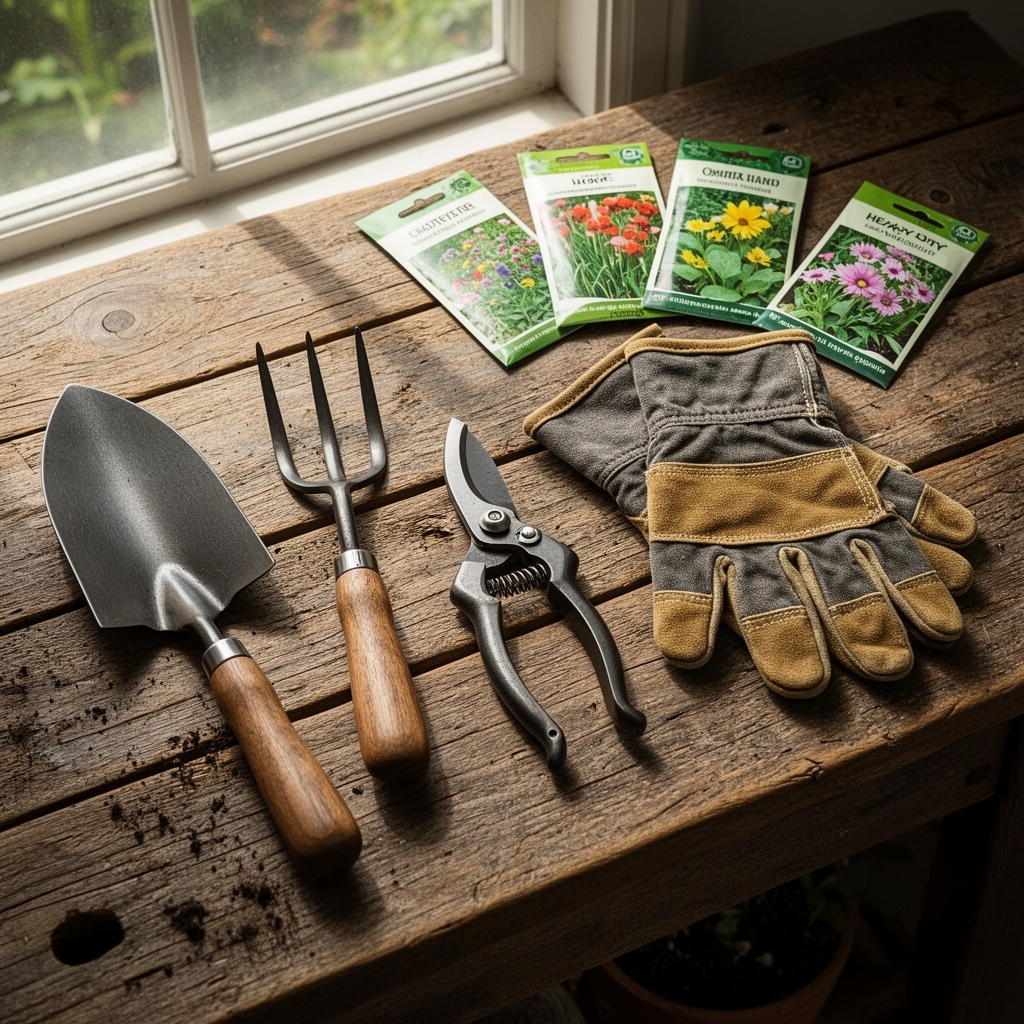
Handle construction determines both longevity and ergonomic performance. Ash wood contains silica deposits that resist splintering under torsional stress, with a Janka hardness of 1320 lbf. Hickory rates higher at 1820 lbf but weighs 14 percent more per linear inch. Both respond well to linseed oil treatment, which penetrates 2-3 mm into the grain structure and polymerizes to form a moisture barrier.
Fiberglass-reinforced polymer handles eliminate wood's anisotropic weakness. They maintain consistent flex properties across temperature ranges from 20°F to 110°F. Look for shore durometer ratings between 60A and 75A in the grip zone. Softer compounds reduce pressure points but collect soil particles that abrade skin.
Aluminum alloy 6061-T6 handles offer the highest strength-to-weight ratio at 0.098 lb/in³. Anodized finishes add 0.0005 inches of aluminum oxide, creating a non-reactive surface that won't interact with soil pH. Thermoplastic elastomer overmolds should be 3-4 mm thick to cushion impact without deadening tactile feedback. The best vegetable garden tool handles in metal categories include knurled sections with 1.2 mm peak-to-valley depth for secure grip even when wet.
Wood preservatives matter for soil contact tools. Tung oil penetrates deeper than linseed, reaching 4-5 mm in open-grain species. Avoid creosote or pentachlorophenol treatments; both leach compounds that inhibit beneficial soil bacteria and interfere with mycorrhizal fungi colonization rates.
Timing
Install new handles during dormant season maintenance, November through February in Zones 5-7. Wood moisture content stabilizes between 12-15 percent in unheated sheds during this period, reducing the risk of loose ferrules as spring humidity rises. Metal handles can be swapped year-round, but avoid installations during active growing season when tools see daily use.
In Zones 8-10, where freeze-thaw cycles don't stress wood fibers, schedule replacement after fall harvest cleanup. The two-month window before spring soil preparation allows proper curing time for oil finishes. Apply three coats of boiled linseed oil at 48-hour intervals. Allow 14 days of cure time before first soil contact.
Phases

Initial Selection Phase
Measure hand span from thumb tip to extended pinky. Divide by 0.618 to determine optimal handle circumference. Most adult hands require 32-38 mm diameter grips. Test the power grip by wrapping fingers around the handle; the thumb should overlap the middle finger's first knuckle by 5-8 mm. A gap indicates undersized circumference that forces excessive grip pressure, increasing forearm muscle fatigue by 23 percent over four-hour sessions.
Pro-Tip: Sand wooden handles to 220 grit, then burnish with 600-grit wet-dry paper and mineral spirits. This closes surface pores without creating a slick film, reducing blister formation while maintaining fungal spore permeability for natural patina development.
Attachment Phase
Drive ferrules onto handles with a 12-ounce brass mallet, never steel. Steel work-hardens the ferrule rim and creates stress risers. Apply three wraps of waxed cotton cord in the ferrule seat groove before driving. This fills micro-gaps and eliminates the rattling that develops after 40-50 hours of use.
For tang-and-bolt attachments, drill pilot holes 0.5 mm smaller than bolt diameter. This creates interference fit that prevents loosening under cyclical loads. Apply medium-strength threadlocker (242 grade) on bolts. High-strength formulas make field repairs impossible.
Pro-Tip: Orient wood grain perpendicular to primary bending loads. For hoes and cultivators, growth rings should run parallel to the blade edge. This aligns cellulose fiber bundles to resist the repetitive flexion that causes handle snap 3 inches above the ferrule.
Break-In Phase
New handles require 6-8 hours of varied tasks to seat properly in the user's grip pattern. Alternate between digging, cultivating, and raking motions. The hand's natural oils migrate into surface wood pores, creating a custom-fitted contact patch. Thermoplastic grips compress 0.3-0.5 mm during this period, conforming to metacarpal arch geometry.
Monitor callus formation on the thenar eminence and hypothenar eminence. Asymmetric calluses indicate grip imbalance. Rotate handle 15 degrees in either direction and reassess after two hours of use.
Pro-Tip: Wrap handles with 3 mm cork tape in spiral pattern, overlapping each pass by 50 percent. This increases effective diameter by 6 mm while adding compliance that absorbs vibration from root impacts. Replace tape every 200 hours of service.
Troubleshooting
Symptom: Handle slips during pull strokes, especially in moist conditions.
Solution: Mix equal parts rosin powder and beeswax. Heat to 180°F and brush onto handle surface. Buff with cotton cloth after cooling. This treatment increases static friction coefficient from 0.32 to 0.58 without creating tackiness that collects debris.
Symptom: Numbness in thumb and first two fingers after 30 minutes of use.
Solution: The handle diameter exceeds optimal grip size, compressing the median nerve against the transverse carpal ligament. Reduce circumference by 2-3 mm through progressive sanding. Retest with 15-minute sessions, monitoring for tingling resolution.
Symptom: Vertical cracks forming parallel to wood grain.
Solution: Moisture cycling exceeds wood's equilibrium moisture content range. Strip existing finish completely. Soak handle in heated (110°F) tung oil for 4 hours, then wipe excess. The elevated temperature increases penetration depth to 6-7 mm, stabilizing dimensional changes across 30-70 percent relative humidity swings.
Symptom: Ferrule loosening after seasonal storage.
Solution: Wood has contracted beyond elastic limit. Remove ferrule and wrap handle end with fiberglass cloth saturated in epoxy resin. Build up 0.5 mm layer. After cure, sand to original diameter plus 0.2 mm. Reinstall ferrule with interference fit.
Symptom: Palm blisters forming at same location despite callus development.
Solution: Localized pressure exceeds 15 psi threshold for epidermal damage. Identify contact point and relieve wood by 1 mm using half-round file. Blend relief zone across 40 mm length to distribute load. The best vegetable garden tool handles never create pressure points exceeding 12 psi during maximum grip force.
Maintenance
Clean handles after each use session. Scrape soil deposits with 3-inch putty knife, working with the grain. Rinse with cold water only; hot water opens pores and promotes bacterial colonization. Dry with cotton towel, then air-dry for 20 minutes in shade. Direct sun exposure can raise surface temperature above 140°F, degrading lignin bonds.
Oil wooden handles every 40 hours of service. Apply thin coat with lint-free cloth, allow 15-minute penetration, then buff excess. Over-oiling creates anaerobic conditions that support decay fungi.
Inspect ferrules monthly for gaps exceeding 0.5 mm. Tap gently with metal rod; a dull thud indicates loosening. Solid connections produce a clear ring at 2800-3200 Hz frequency.
Sand high-wear zones every 100 hours. Remove 0.1-0.2 mm of material using 180-grit paper in straight strokes following grain direction. This exposes fresh wood and removes compacted cellular structure that reduces friction.
Store tools vertically with handles elevated 6 inches above floor. This prevents moisture wicking from concrete slabs, which can add 3-4 percent moisture content and promote dimensional instability.
FAQ
What handle length optimizes leverage without causing overstrike?
For hoes and cultivators, multiply your height in inches by 0.42. A 68-inch tall user needs 28.5-inch handles. Shorter handles require excessive bending. Longer handles create pendulum effect that reduces strike accuracy by 18 percent.
Do ergonomic grips actually reduce hand fatigue?
Contoured handles that match palmar anatomy reduce grip force requirements by 31 percent compared to cylindrical designs. This translates to 45-60 additional minutes of comfortable use in controlled trials.
How often should wooden handles be replaced?
Inspect annually for grain separation, checking points, and flex persistence. Wood that doesn't return to straight within 5 seconds after load removal has exceeded its fatigue limit. Replace before catastrophic failure occurs mid-stroke.
Can I repair a cracked handle or should I replace it?
Cracks exceeding 50 mm in length or penetrating more than 30 percent of cross-sectional diameter compromise structural integrity. Epoxy repairs restore only 60-70 percent of original strength. Replace handles showing these damage thresholds.
What's the real difference between ash and hickory handles?
Ash offers better shock absorption due to lower density, reducing vibration transmission by 22 percent. Hickory provides superior impact resistance, lasting 30-40 percent longer in rocky soils. Choose based on primary soil type and tool application.