8 Specialized Steps to Prepare a Carnivorous Plant Terrarium
Learning how to prepare a terrarium with carnivorous plants transforms standard container gardening into a precision exercise in manipulating water chemistry, substrate acidity, and light intensity. These botanical predators evolved in nutrient-poor bogs where soil pH ranges between 3.5 and 5.0, nitrogen sources arrive through insect digestion rather than root uptake, and mineral salts remain almost nonexistent. A properly constructed carnivorous terrarium replicates these extreme conditions in miniature, creating a closed or semi-closed system where Sarracenia pitcher plants, Drosera sundews, and Dionaea flytraps thrive without synthetic fertilizers or tap water. The eight specialized steps that follow address substrate cation exchange capacity, photoperiod requirements, and humidity gradients that conventional houseplant care ignores.
Materials
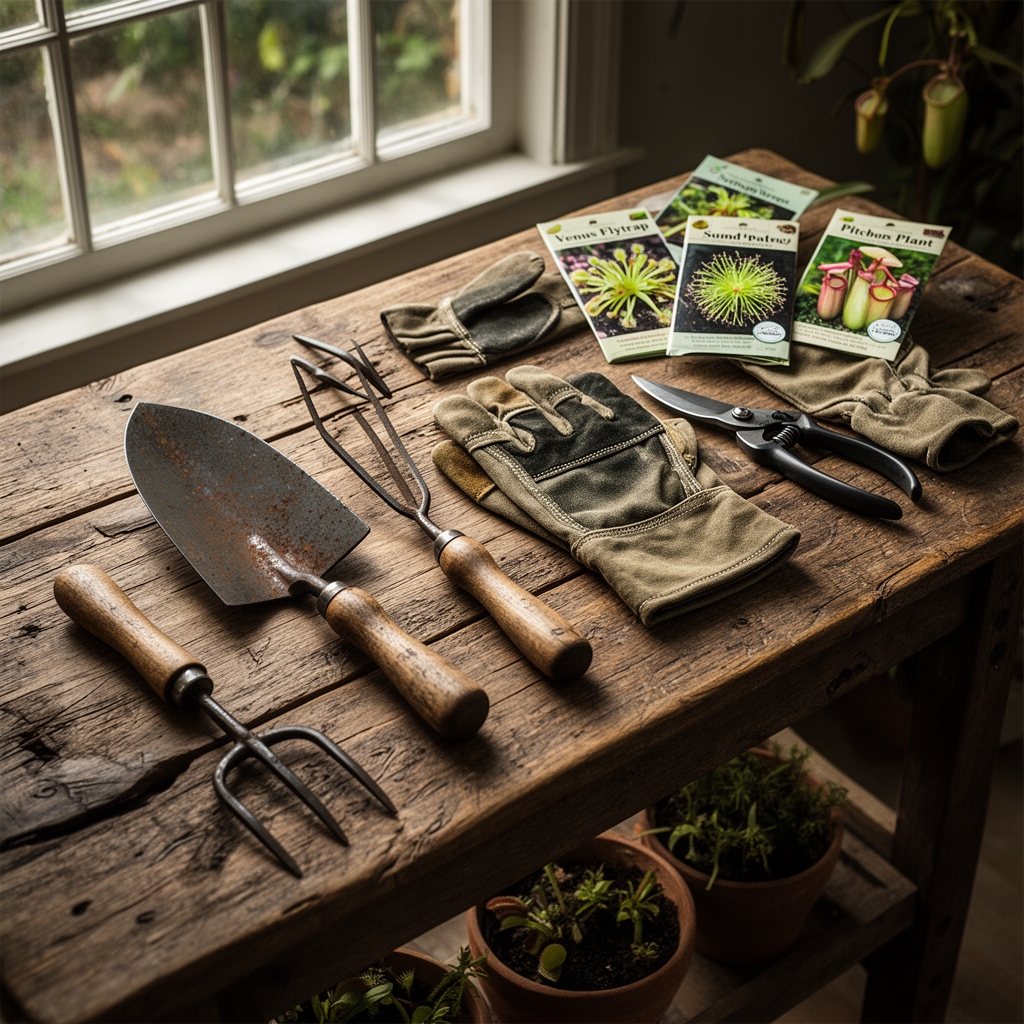
Select a glass vessel with a minimum 5-gallon capacity to buffer temperature swings. Acrylic scratches too easily during maintenance. Use only long-fiber sphagnum moss (pH 3.5-4.0) and silica sand (washed, no calcium carbonate), blended 2:1 by volume. Perlite substitutes for sand but must be horticultural grade with total dissolved solids below 20 ppm. Avoid peat moss entirely; its decomposition elevates electrical conductivity beyond 150 microsiemens per centimeter, which burns root tips.
Carnivorous plants require zero NPK supplementation. Standard organic meals like 4-4-4 blood-bone-kelp formulations deliver lethal salt loads. Instead, rely on prey capture for nitrogen, phosphorus from insect chitin, and potassium from enzymatic breakdown. Water must be reverse-osmosis filtered, distilled, or collected rainwater with TDS readings under 50 ppm. Municipal tap water contains chloramines, fluoride, and hardness minerals that accumulate in substrate and cause necrosis within six weeks.
Additional materials include activated charcoal (1/2 inch layer for anaerobic prevention), a full-spectrum LED grow light (6500K, 2000-3000 lumens), and a hygrometer to monitor relative humidity between 60-80 percent. A misting bottle with adjustable nozzle provides foliar humidity without waterlogging the substrate.
Timing
Initiate terrarium construction in early spring, March through April for USDA Hardiness Zones 6-9. This timing coincides with the end of winter dormancy for temperate species like Sarracenia and Dionaea. Tropical species such as Nepenthes require no dormancy but benefit from spring planting to maximize the growing season ahead.
Frost-date windows matter even for indoor terrariums because dormancy-requiring species need 8-12 weeks of cold stratification. Place dormant plants in a refrigerator held at 35-45 degrees Fahrenheit from November through February. Resume normal terrarium conditions two weeks after the last expected frost date in your region. This cold period resets auxin distribution and primes growth hormone production for the next active season.
Phases
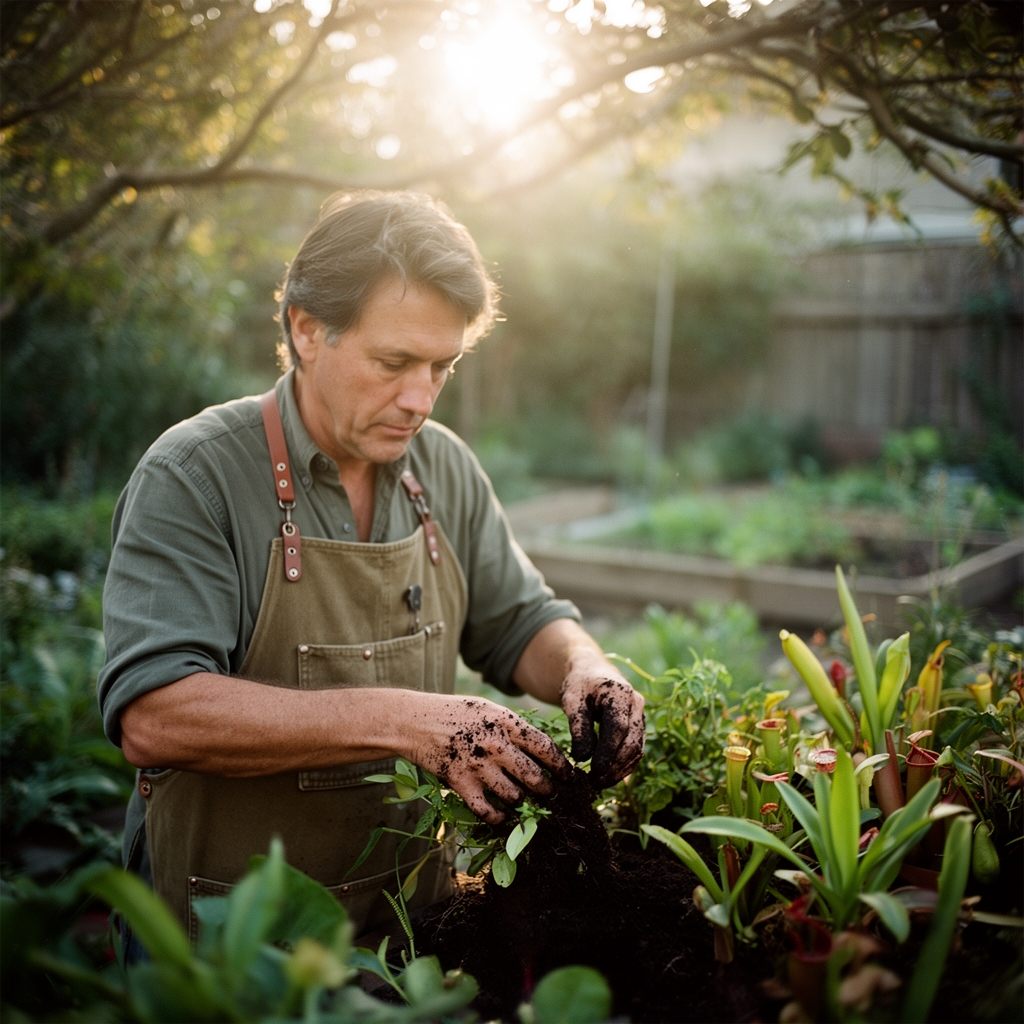
Sowing Phase: For seed propagation, surface-sow seeds on pre-moistened sphagnum without covering them. Carnivorous plant seeds require light for germination. Maintain substrate temperature at 70-75 degrees Fahrenheit using a seedling heat mat. Germination occurs in 14-42 days depending on species. Sarracenia seeds germinate faster after 4-6 weeks cold stratification in moist sand at 40 degrees Fahrenheit.
Pro-Tip: Inoculate sphagnum with Trichoderma harzianum fungal spores at a rate of 1 gram per gallon of substrate. This beneficial fungus suppresses damping-off disease caused by Pythium and Rhizoctonia without harming carnivorous plant roots.
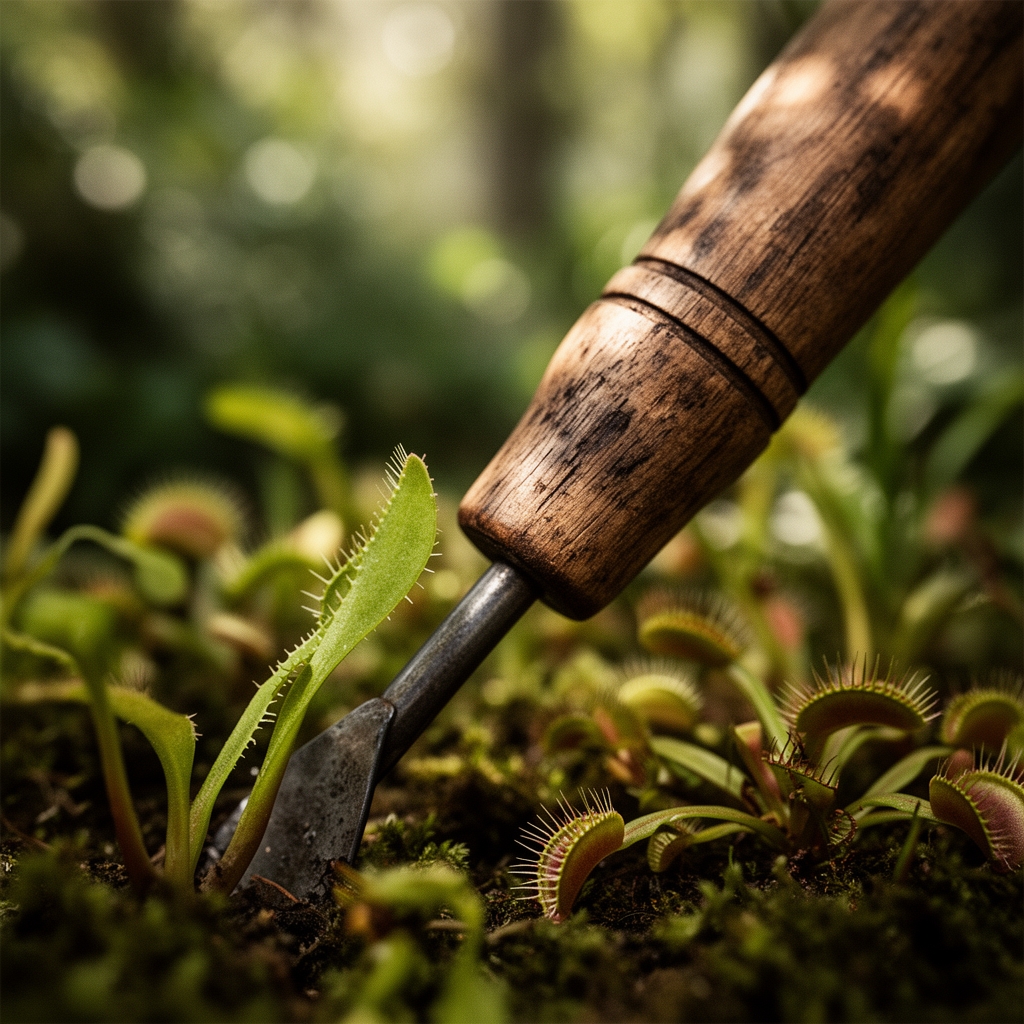
Transplanting Phase: Move seedlings when they develop two true traps or pitchers, typically 8-12 weeks post-germination. Excavate seedlings with tweezers to avoid root damage. Plant at the same depth as the original growing position; burying crowns invites bacterial rot. Space plants 3-4 inches apart to allow mature trap development.
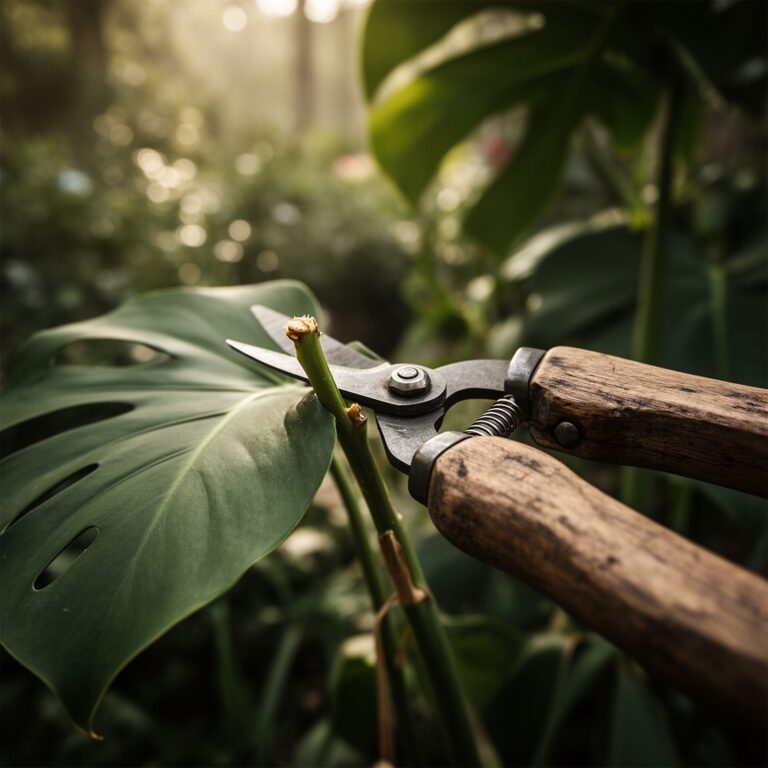
Pro-Tip: Trim any damaged root tips at a 45-degree angle with sterilized micro-shears. This angle maximizes surface area for auxin accumulation and accelerates lateral root formation within 10 days.
Establishing Phase: New transplants require 90-120 days to establish functional root systems and resume active trap production. During this window, maintain photoperiods of 14-16 hours daily using the grow light positioned 8-12 inches above the tallest plant. Lower light intensity triggers etiolation; excessive intensity causes leaf scorch visible as brown marginal necrosis.
Pro-Tip: Introduce live fruit flies (Drosophila melanogaster) at a density of 5-10 insects per plant monthly. Natural prey capture stimulates digestive enzyme production and strengthens trap response times by 30 percent compared to unfed controls.
Troubleshooting
Symptom: Black, mushy stem bases with foul odor. Solution: Crown rot from Botrytis cinerea. Remove affected plants immediately, increase air circulation, reduce misting frequency to twice weekly, and apply sulfur dust at 1/4 teaspoon per square foot of substrate surface.
Symptom: White cottony masses on leaf axils. Solution: Mealybugs (Pseudococcidae family). Swab insects with 70 percent isopropyl alcohol on cotton swabs. Repeat every three days for two weeks. Introduce predatory lacewing larvae (Chrysoperla carnea) as biological control.
Symptom: Traps fail to close despite mechanical stimulation. Solution: Insufficient light or premature dormancy signals. Verify light intensity exceeds 2000 lumens at plant level. Check photoperiod remains above 12 hours. Supplement with additional LED arrays if needed.
Symptom: Yellow, elongated leaves with reduced trap size. Solution: Nitrogen toxicity from contaminated water or substrate. Flush substrate with 2 gallons of distilled water per gallon of substrate volume. Test replacement water for TDS below 50 ppm.
Maintenance
Water terrarium by pouring distilled water directly onto substrate until the water table rises to 1 inch below the surface. Never allow standing water to cover plant crowns. Check water levels every 3-4 days in summer, every 7 days in winter. Top-dress with fresh long-fiber sphagnum annually each spring to replace decomposed material.
Prune dead traps with sterilized scissors at their base to prevent fungal colonization. Maintain relative humidity by misting foliage twice weekly if ambient humidity drops below 55 percent. Clean glass walls monthly with distilled water and a microfiber cloth; soap residue contains salts toxic to carnivorous plants.
Remove the terrarium lid for 30 minutes daily to prevent CO2 depletion and oxygen stagnation. Closed systems require gas exchange to support both plant respiration and aerobic bacteria in the substrate that prevent anaerobic decomposition.
FAQ
How often do carnivorous plants need feeding?
Feed one or two small insects per trap monthly during active growth. Overfeeding wastes the plant's energy and causes trap blackening.
Can I use potting soil in a carnivorous terrarium?
No. Potting soil contains fertilizers, lime, and organic matter with high cation exchange capacity that releases toxic mineral salts.
What temperature range is ideal?
Tropical species prefer 70-85 degrees Fahrenheit year-round. Temperate species need 35-45 degrees Fahrenheit for 8-12 weeks in winter.
Why are my pitcher plants turning brown?
Low humidity, insufficient light, or water with elevated TDS causes pitcher necrosis. Verify humidity above 60 percent and light intensity above 2000 lumens.
How long do carnivorous terrariums last?
With proper substrate replacement every 18-24 months and annual division of crowded plants, terrariums function indefinitely. Individual plants live 5-20 years depending on species.