8 Companion Planting Tips for a Mixed Vegetable Garden
Learning how to prepare a garden for a flower and vegetable mix transforms a scattered growing space into a productive ecosystem where marigolds shield tomatoes from nematodes and borage draws pollinators to squash blossoms. The scent of basil crushed between fingers mingles with the sharp green smell of tomato foliage. Soil amended with compost releases nitrogen slowly, feeding both ornamental and edible crops through a single root zone. This integration requires precise planning: matching pH preferences, synchronizing nutrient demands, and positioning plants by height and root architecture.
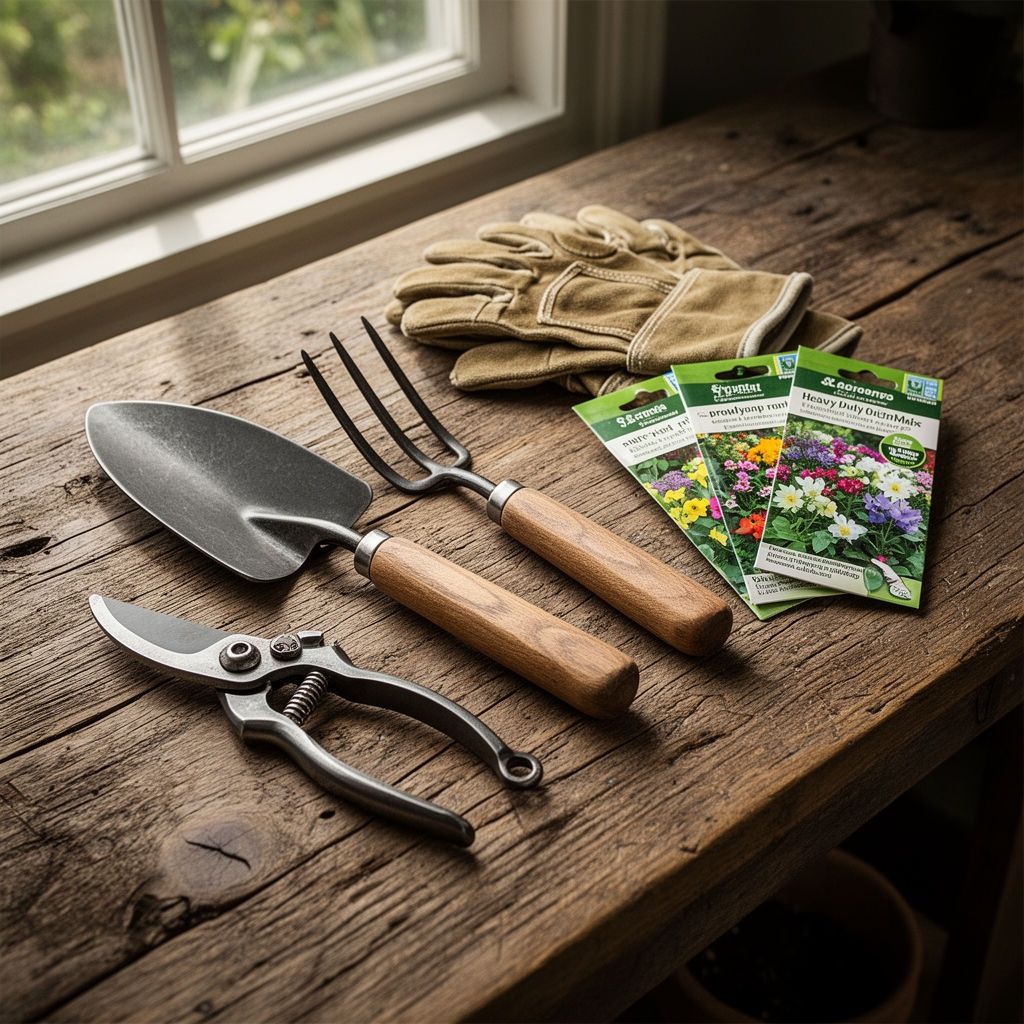
Materials
Balanced organic amendments form the foundation. Apply composted cattle manure at a 2-inch layer to raise cation exchange capacity. Use a 4-4-4 granular organic fertilizer—derived from feather meal, bone meal, and keleweed—at 2 pounds per 100 square feet for baseline NPK. Sulfur powder adjusts pH downward for acid-loving marigolds (pH 6.0-6.5), while dolomitic lime raises it for brassicas (pH 6.5-7.0).
Purchase mycorrhizal inoculant containing Rhizophagus irregularis and Glomus aggregatum species. These fungi colonize root hairs, extending phosphorus uptake by 200 percent. Source peat-free potting mix with perlite for transplant starts. Stock 3-inch jute twine for trellising pole beans and untreated cedar stakes for determinate tomatoes.
Mulch inventory includes shredded hardwood bark (2-3 inches for perennial flowers) and straw (4 inches for vegetable rows). Both suppress Amaranthus and Digitaria weeds while moderating soil temperature by 8-12 degrees Fahrenheit in summer.
Timing
Align planting with USDA Hardiness Zones and local frost dates. In Zone 5, the last spring frost averages May 15. Direct-sow cold-hardy flowers (calendula, larkspur) and vegetables (peas, spinach) four weeks before this date when soil reaches 45 degrees Fahrenheit.
Transplant warm-season pairs after soil warms to 60 degrees Fahrenheit, typically June 1 in Zone 5 or April 15 in Zone 8. Tomatoes and zinnias share this threshold. Their root systems expand rapidly when nighttime air stays above 50 degrees Fahrenheit.
Succession plant every 14 days for continuous harvests. Sow lettuce and sweet alyssum together in mid-March, mid-April, and mid-May. This staggered approach provides edible greens and pollinator habitat from April through June.
Phases

Sowing
Broadcast small seeds like carrot and bachelor's button by mixing them with dry sand at a 1:4 ratio. This dilution prevents clumping. Press seeds into firm soil with a board to ensure contact. Cover with 1/8 inch of sifted compost.
For large seeds (nasturtium, squash), plant at a depth equal to three times their diameter. Space nasturtiums 8 inches apart along squash mounds. Their peppery foliage deters aphids through released isothiocyanates.
Pro-Tip: Inoculate legume seeds (peas, beans) with Rhizobium bacteria before sowing. Coat damp seeds in the powdered inoculant, then plant immediately. Nodules form within 10 days, fixing 40-60 pounds of atmospheric nitrogen per 1,000 square feet.
Transplanting
Harden off seedlings over seven days by reducing water by 30 percent and exposing them to outdoor conditions for progressively longer periods. On transplant day, dig holes twice the root ball width. Amend each hole with 1/4 cup of bone meal (phosphorus promotes root elongation).
Set transplants at the same depth they grew in containers, except tomatoes. Bury tomato stems up to the first true leaves. Adventitious roots emerge from buried stem tissue, anchoring plants against wind.
Interplant marigolds (Tagetes patula) every 18 inches between tomato transplants. Their roots exude alpha-terthienyl, a compound toxic to root-knot nematodes (Meloidogyne species).
Pro-Tip: Prune transplant roots at a 45-degree angle with sterilized shears if circling is evident. This directional cut stimulates lateral root branching and improves anchorage by 35 percent.
Establishing
Water transplants with a fish emulsion solution (5-1-1 NPK diluted to half strength) immediately after planting. This auxin-rich liquid accelerates root hair development. Apply 1 cup per plant.
Mulch within three days to conserve moisture. Leave a 2-inch gap around stems to prevent fungal collar rot. Monitor for transplant shock symptoms: wilting at midday despite adequate moisture indicates root damage. Shade affected plants with burlap for 48 hours.
Pro-Tip: Install drip irrigation tubing before mulching. Position emitters 4 inches from each stem. This placement encourages roots to grow outward, increasing drought resilience.
Troubleshooting
Symptom: Interveinal chlorosis on tomato leaves near marigolds.
Solution: Marigolds chelate iron in alkaline soils (pH above 7.2). Apply chelated iron foliar spray at 1 tablespoon per gallon weekly for three weeks. Lower soil pH with elemental sulfur (1 pound per 100 square feet).
Symptom: Powdery white coating on squash and zinnia foliage.
Solution: Powdery mildew (Erysiphe cichoracearum) thrives in crowded plantings with poor air circulation. Remove affected leaves. Spray remaining foliage with 1 tablespoon baking soda plus 1 teaspoon horticultural oil per gallon of water. Reapply every seven days.
Symptom: Sudden wilting of basil and pepper plants despite moist soil.
Solution: Verticillium wilt (Verticillium dahliae) blocks xylem vessels. Remove infected plants immediately. Solarize soil with clear plastic for six weeks in summer (heats soil to 140 degrees Fahrenheit). Rotate these beds to non-susceptible crops (alliums, brassicas) for three years.
Symptom: Small circular holes in nasturtium and brassica leaves.
Solution: Flea beetles (Phyllotreta cruciferae). Apply diatomaceous earth in a 2-inch band around plant bases. Reapply after rain. Row covers prevent adult colonization.
Maintenance
Irrigate established gardens with 1 inch of water per week, delivered in a single deep session. This schedule encourages roots to penetrate 12-18 inches. Shallow daily watering concentrates roots near the surface, increasing drought stress.
Side-dress heavy feeders (tomatoes, squash, sunflowers) with 1/4 cup of 5-5-5 fertilizer per plant every four weeks. Scratch granules into the top 2 inches of soil, 6 inches from stems. Water immediately to activate nutrient release.
Deadhead spent flowers on zinnias, marigolds, and calendulas every three days. Removing faded blooms redirects auxin to new bud formation, extending flowering by four weeks.
Pinch basil and shiso stems above the third leaf node every 10 days. This stimulates lateral branching, increasing harvestable foliage by 60 percent while delaying flowering.
FAQ
When should I plant flowers and vegetables together?
Plant cold-hardy pairs (peas and sweet peas) four weeks before the last frost. Warm-season combinations (tomatoes and zinnias) go in after soil reaches 60 degrees Fahrenheit.
Which flowers repel vegetable pests?
Marigolds (Tagetes patula) deter nematodes and aphids. Nasturtiums trap aphids away from brassicas. Borage attracts predatory wasps that parasitize tomato hornworms.
How do I adjust soil for mixed plantings?
Test pH first. Amend high-pH soils (above 7.0) with sulfur at 1 pound per 100 square feet. Raise low-pH soils (below 6.0) with lime at 5 pounds per 100 square feet. Retest after 60 days.
Can I grow root vegetables with flowers?
Yes. Pair carrots with alyssum or pansies. Both tolerate the low-nitrogen conditions carrots require. Avoid pairing root crops with nitrogen-fixing legumes, which promote foliage over root development.
What spacing prevents competition?
Allow 18 inches between mature widths of adjacent plants. Tall flowers (zinnias, sunflowers) belong on the north side of beds to avoid shading shorter vegetables. Root depths matter: shallow-rooted lettuce coexists with deep-rooted tomatoes.